Specs Fine Books
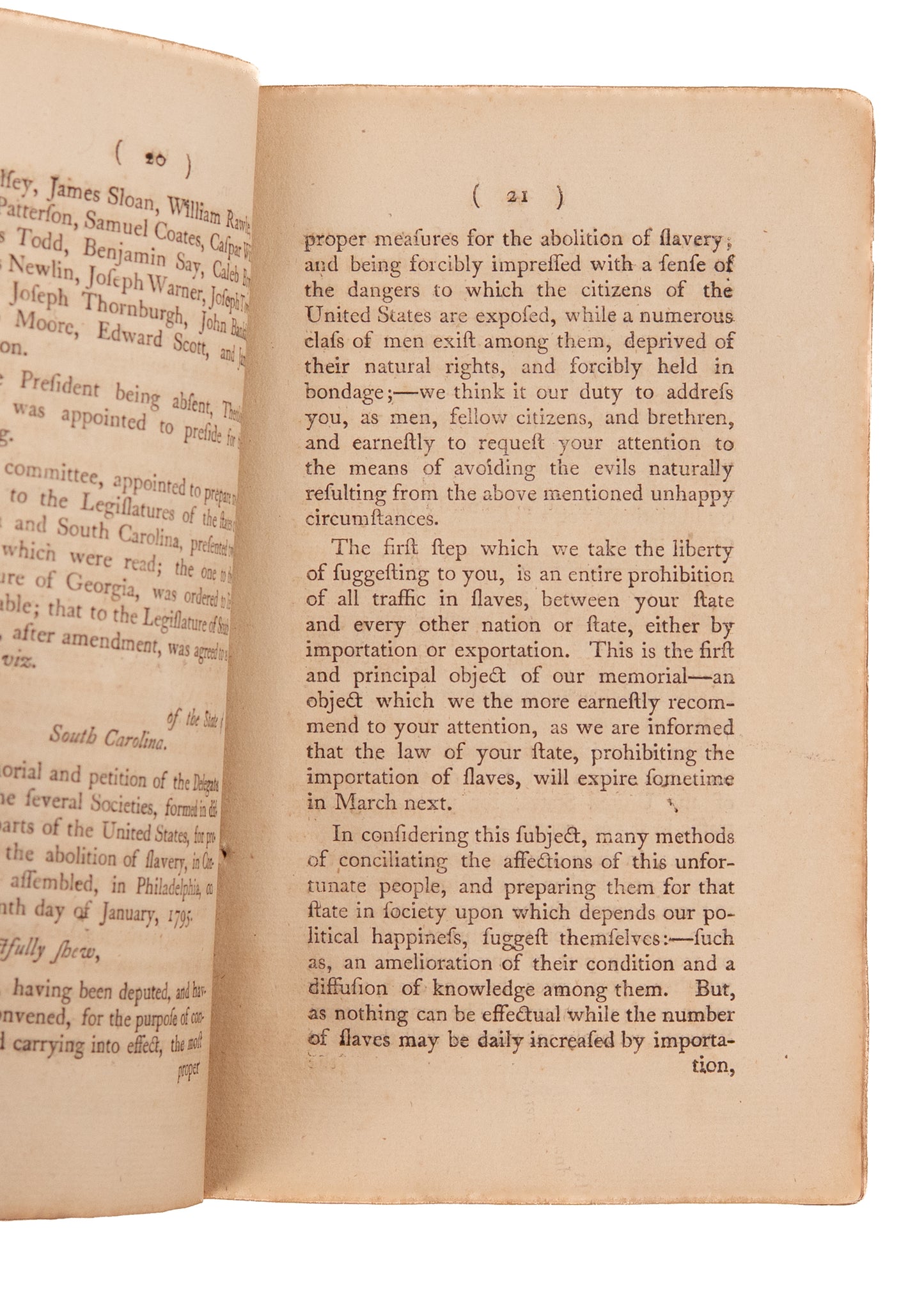
1795 FIRST ABOLITIONIST SOCIETY IN AMERICA. Minutes of the Second Convention of Abolition Societies in Philadelphia.
1795 FIRST ABOLITIONIST SOCIETY IN AMERICA. Minutes of the Second Convention of Abolition Societies in Philadelphia.
Couldn't load pickup availability
The 1795 Minutes of the Proceedings of the Third Convention of Delegates is an absolutely foundational document that captures the American abolitionist movement in its earliest efforts, post-Revolutionary phase. Published by Zachariah Poulson in Philadelphia—then the epicenter of American reform—it records a moment when anti-slavery efforts shifted from individual religious protests to a coordinated national strategy.
The Minutes reveal a sophisticated attempt to unify disparate local groups into a single political lobby. By meeting in Philadelphia, these delegates aimed to exert direct influence on the fledgling federal government, establishing a precedent for national civil rights conventions that would continue for the next century.
The 1795 Minutes outline a specific, multi-approach conservative strategy for ending slavery that defined the early Republic, focused on petitioning state legislatures and Congress. Rather than calling for immediate insurrection or revolution, the delegates focused on the "gradual" abolition of slavery and the strict enforcement of the Slave Trade Act of 1794, which prohibited American ships from participating in the international trade.
Significantly, a major portion of the proceedings was dedicated to the legal protection of free Black people. The convention coordinated efforts to prevent the kidnapping of free citizens into Southern slavery, a rising crisis following the Fugitive Slave Act of 1793.
The Minutes also emphasize that for abolition to be successful, freed individuals must be "qualified" for citizenship. This led to the convention's recommendation for the establishment of schools and the promotion of moral and industrial education among Black communities, framing "elevation" as a prerequisite for social acceptance.
The crescendo of the document includes an Address to the Citizens of the United States, which used the language of the Declaration of Independence to point out the glaring contradiction between the "rights of man" and the continued existence of chattel slavery. This rhetoric was designed to shame the "republican" sensibilities of the American public.
Minutes of the Proceedings of the Second Convention of Delegates from the Abolition Societies, Established in Different Parts of the United States on the Seventh Day of January, One Thousand Seven Hundred and Ninety-Five, and Continued by Adjournments, Until the Foureenth Day of the Same Month Inclusive. Philadelphia. Zachariah Poulson. 1795. 32p.
Good + in original mineral blue wraps, some light deterioration of wraps as shown; rear rather tender; interior rather good and clean with light handling.
Share