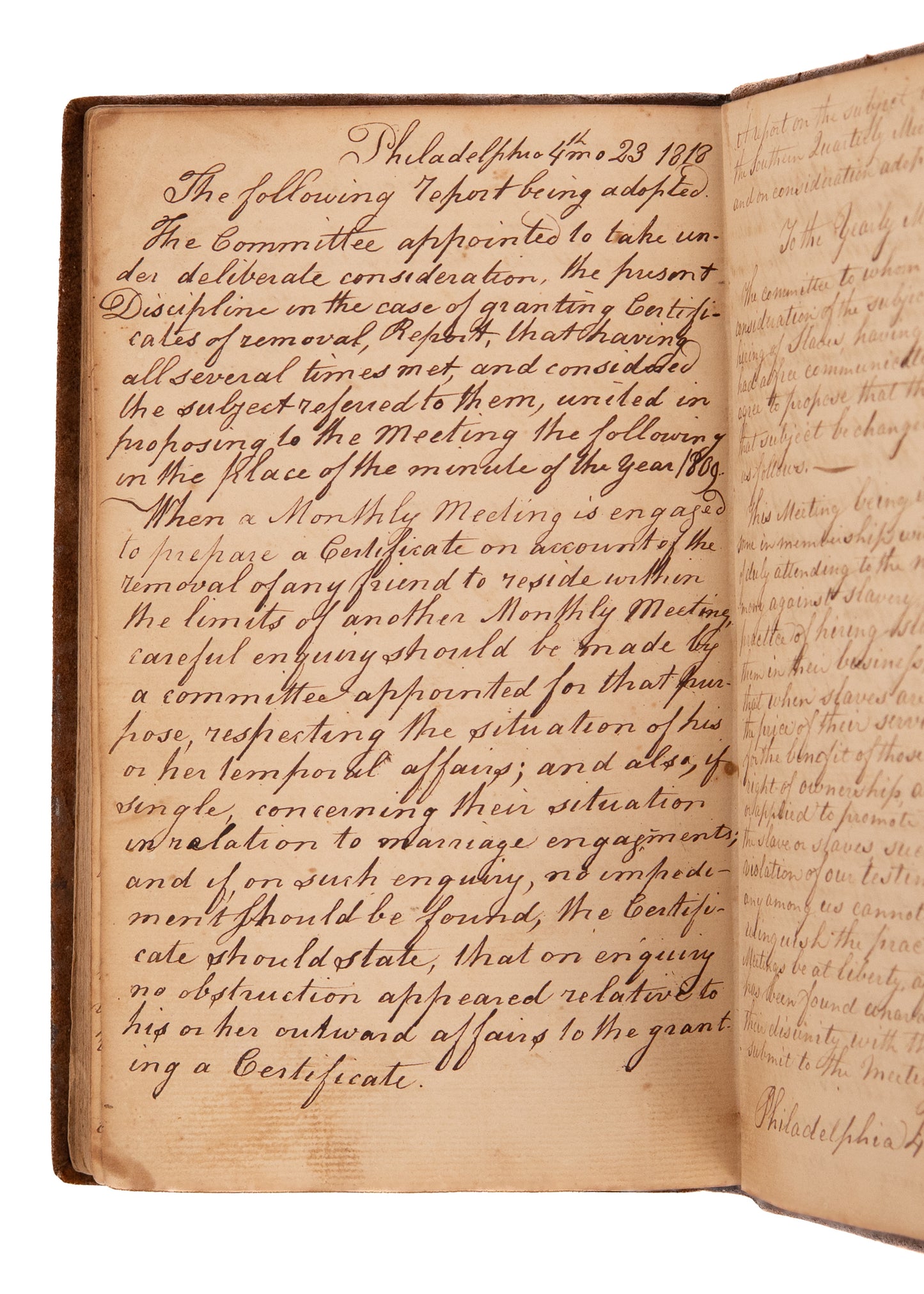
The landmark 1806 Rules of Discipline represents the first comprehensive printed codification of the Philadelphia Yearly Meeting's anti-slavery principles, a formal, bound statement of Quaker law that had banned slaveholding outright.
In 1754, the Philadelphia Quarterly Meeting and the Yearly Meeting published a paper declaring slavery a sin, and in 1758 passed a minute denouncing engagement with the slave trade. Individual Friends continued to pressure the yearly meeting to make slaveholding itself a cause for disownment and discipline. In 1774, the Philadelphia Yearly Meeting had forbidden Quakers from buying or selling slaves and required masters to free slaves at the earliest opportunity; two years later, the meeting directed Friends to disown any Quakers who resisted pleas to manumit their slaves. The 1806 Discipline enshrined that enforcement mechanism in print for the first time.
Significantly, the printing was issued the same year Congress began actively debating the abolition of the Atlantic slave trade [1806], which it at last banned, effective January 1, 1808.
This specific copy also includes MSs appendices and updates to Quaker governance, including a lengthy 1824 update to their views and responsibilities with regard to "negro slavery."
A MSs inscription on the ffep reads, "This book belongs to Concord Preparative meeting of men friends."
[Quakers, Slavery] Rules of Discipline of the Yearly Meeting of Friends, Held in Philadelphia. Printed by Direction of the Meeting. Philadelphia. Printed by Kimber, Conrad, & Co. 1806. 126pp + 11pp [Index] + 12pp [MSs Additions]
Very good in original full reverse calf, some rubbing and bumping as shown; some handling and light foxing throughout. Very sound and well-preserved.