Specs Fine Books
1901 R. C. CHAPMAN. 98 Year Old Chapman Quotes then Unknown G. K. Chesterton's "The Donkey"
1901 R. C. CHAPMAN. 98 Year Old Chapman Quotes then Unknown G. K. Chesterton's "The Donkey"
Couldn't load pickup availability
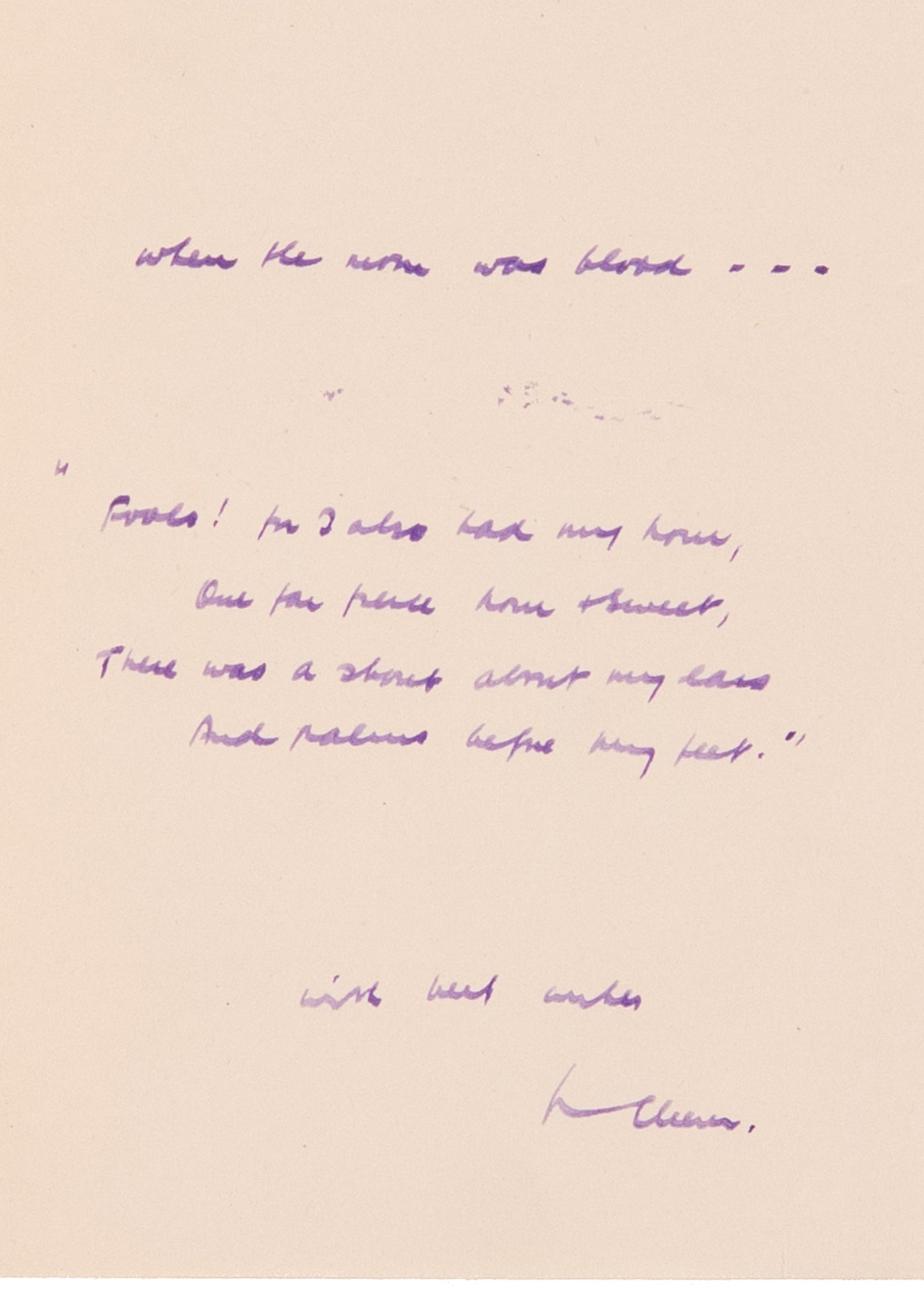
A fascinating late-life item from the hand of the "Apostle of Love," Robert Cleaver Chapman. C. H. Spurgeon called him the saintliest man I ever knew.
While the sheet is undated, the quoted Chesterton poem was not published until 1900, so it must have been written in the last two years of Chapman's life, making it a fascinating piece of insight into the closing thoughts of one of the foundational patriarchs of the Plymouth Brethren movement.
Chapman was of course the closest lifelong co-laborer in the ministry of George Muller and was considered by Muller to have been something of a mentor. The two arrived in their respective English ministry posts in the exact same year (1832). When massive theological and ecclesiastical controversies tore the Brethren movement apart into "Open" and "Exclusive" factions, Chapman and Müller stood as the great unified pillars of grace, refusing to participate in the toxic legalism and division of the era. This 1901 text reflects the exact pastoral heartbeat that made Müller famously observe of his friend, in nearly the same words as Spurgeon,"Robert Chapman is the most saintly man I ever knew."
To me, the choice of Chapman to include a quote from a young G.K. Chesterton is unexpected. At this time, Chesterton was a rising, 20-something journalist who had just published his earliest essays. By capturing a quote from Chesterton at this exact moment, Chapman’s piece demonstrates how closely the aged, 98-year-old evangelical leader was tracking contemporary Edwardian culture. It reveals that even at the end of his life, Chapman was actively reading and engaging with the fresh, witty intellectual voices of the new century to bolster his timeless message of Christian devotion and unity.
The choice of text is not lost either. Chapman, standing on the edge of eternity, revered by many of the most famous men in Evangelicalism, chooses to identify with Chesterton's glorious donkey. Chesterton too, it seems, has had his hour, his glorious hour, fierce and sweet.
It reads, in full:
when the moon was blood . . .
"Fools! For I also had my hour,
One far fierce hour and sweet,
There was a shout about my ears,
And palms before my feet."
With best wishes
R Cleaver.
Share